Home > Blog > Huawei News > Home > Blog > OEM vs ODM: Complete Buyer's Guide

OEM vs ODM: What's the Difference? The Complete Buyer's Guide (2026)

By Lorenzo - BlueShell Team August 7th, 2026 82 views

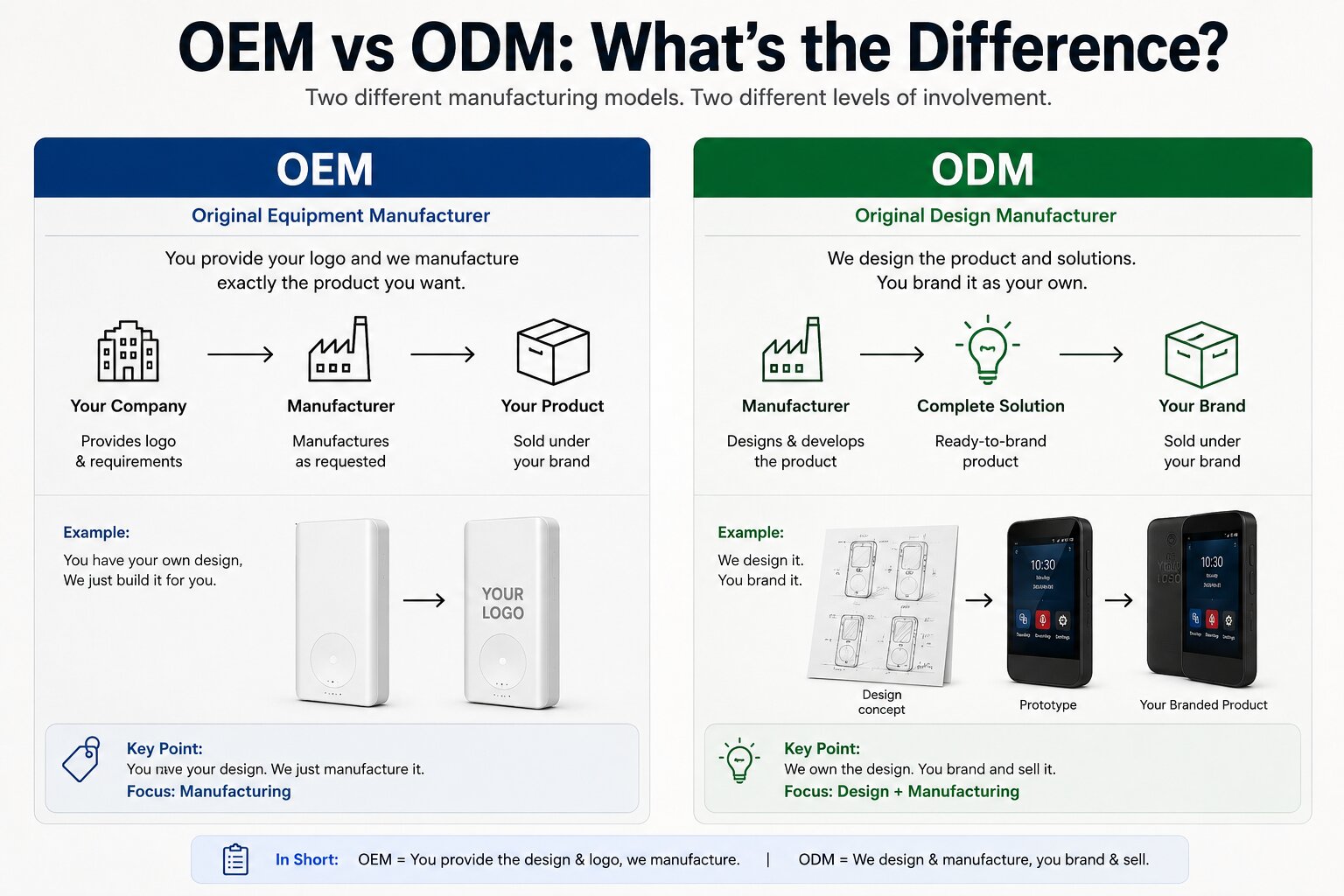
When sourcing electronic products from China, one of the first terms buyers encounter is OEM and ODM. Although these acronyms are widely used throughout the electronics industry, many importers, distributors and even experienced buyers still misunderstand the difference between the two manufacturing models.

Choosing between OEM and ODM is one of the most important decisions when developing a new product. It affects your development costs, production timeline, product uniqueness, intellectual property, customization possibilities and long-term business strategy.

Whether you are launching a new digital signage brand, developing smart home control panels, creating Android commercial displays or expanding an existing product line, understanding how OEM and ODM manufacturing works will help you avoid costly mistakes and choose the right manufacturing partner.

This guide explains everything buyers need to know about OEM and ODM manufacturing, including their advantages, disadvantages, practical applications and how to determine which solution best fits your business.


📌 Key Takeaways

Before selecting a manufacturing partner, remember these important points:

  • OEM manufacturing allows you to customize existing products with your own brand and selected hardware or software modifications.
  • ODM manufacturing offers deeper customization and product development based on your unique requirements.
  • OEM projects generally require shorter development cycles.
  • ODM projects provide greater product differentiation and stronger brand identity.
  • The right manufacturing partner should provide engineering support, quality control, firmware customization and long-term technical assistance.


Why OEM and ODM Matter

Today's electronics market is more competitive than ever. Customers expect products that not only perform well but also reflect a company's brand identity and unique features.

Instead of purchasing generic products from wholesalers, many companies now work directly with Chinese manufacturers to develop customized solutions. This approach offers better pricing, greater flexibility and the opportunity to create products that stand out from competitors.

OEM and ODM manufacturing have become the foundation of this business model, enabling companies of all sizes—from startups to multinational corporations—to launch branded electronic products without owning a factory.

For industries such as digital signage, smart home automation, interactive displays and commercial Android devices, choosing the correct manufacturing model can significantly improve product competitiveness while reducing development risks.


What Does OEM Mean?

OEM stands for Original Equipment Manufacturer.

In an OEM project, the manufacturer produces a product that is customized according to the customer's requirements while maintaining an existing hardware platform or production process.

OEM customization can include:

  • Company logo printing
  • Private label branding
  • Customized packaging
  • Android firmware customization
  • APK pre-installation
  • Launcher customization
  • UI design
  • API integration
  • Language localization
  • Hardware configuration changes
  • Memory upgrades
  • Different display sizes
  • Customized accessories

OEM manufacturing is ideal for companies that want to enter the market quickly while maintaining a professional branded product.


Real OEM Example

Imagine your company wants to sell Android Digital Signage displays.

Instead of developing a display from scratch, you choose an existing commercial display platform from your manufacturing partner.

The manufacturer then customizes:

  • Your logo
  • Your packaging
  • Android boot animation
  • Custom launcher
  • Pre-installed applications
  • API integration
  • Product manual
  • Firmware settings

The hardware platform remains largely unchanged, allowing faster production and lower development costs while providing a product that reflects your brand identity.


How to Choose a Digital Signage Manufacturer in China (Complete Buyer's Guide)
Previous
How to Choose a Digital Signage Manufacturer in China (Complete Buyer's Guide)
Read More
13.3-Inch Color E-Paper Display: 6-Color Digital Signage for Retail and Smart Products
Next
13.3-Inch Color E-Paper Display: 6-Color Digital Signage for Retail and Smart Products
Read More